Geminid Meteor Shower 2026: Dark-Sky Stargazing in the Texas Hill Country
By Gordon Cook · November 9, 2026
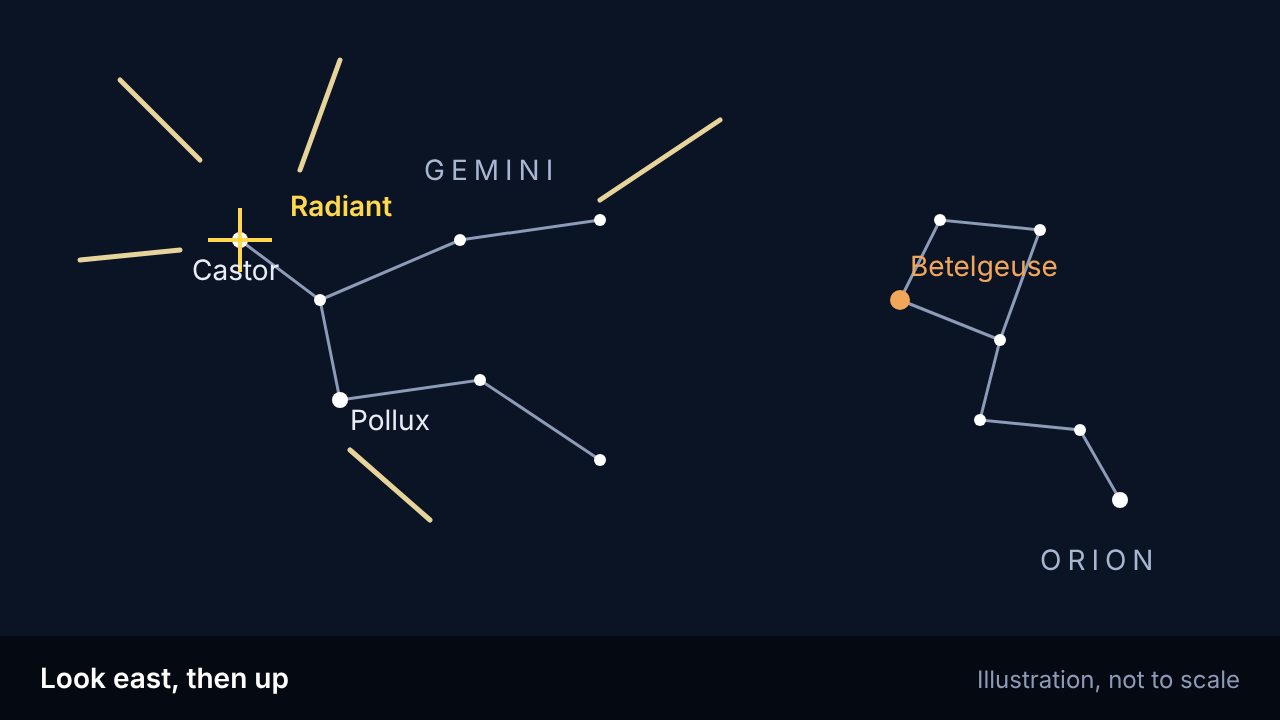
Where to look: face east after dark. The meteors seem to spread out from Gemini, near the star Castor, up and to the left of Orion's bright orange Betelgeuse. Illustration, not to scale.
Every December, right when folks are running ragged with shopping and wrapping, the sky puts on a free show. It's the Geminid meteor shower, and most years it's the best one we get. This year it peaks on the night of Sunday, December 13, into Monday morning, December 14. Bundle up, grab a chair, and let the sky do the work.
Why the Geminids Are Worth Staying Up For
Skywatchers like EarthSky put the Geminids' top rate at around 120 meteors an hour under perfect conditions, and say you can count on at least 50 an hour on a dark night near the peak. Plenty of them are bright and slow enough to catch with your own eyes. Unlike a lot of showers, the Geminids get going in the evening, so you don't have to wait for the wee hours to see something. The best of it usually comes around 2 a.m., and the radiant, up in the constellation Gemini, climbs high overhead as the night goes on.
Better still, the moon is mostly out of the way this year. New moon falls just a few days before the peak, so all that's up is a thin young crescent that drops out of sight in the evening. That leaves you a dark sky for the main event. Double-check a moonrise and moonset table for the night itself before you head out, since the folks who track this stuff don't all agree on the exact hours.
Why Pipe Creek Beats the City
If you live in San Antonio or Austin, you know the glow on the horizon. City lights wash out all but the brightest meteors. Pipe Creek sits between Bandera and Boerne, well past that glow, and on a clear night the Milky Way stretches across the campground like somebody spilled sugar on a black tablecloth. Only about 3 of our 20 acres are developed, so most of what's around you is dark woods and quiet.
How to Watch Like an Old Hand
You don't need a telescope or binoculars. A few simple things make the night better:
- Dress warmer than you think. December nights in the Hill Country can drop cold once the wind picks up. Bring a coat, a blanket and a thermos of something hot.
- Lie back. A reclining chair or a pad on the ground lets you take in the whole sky instead of craning your neck.
- Give your eyes 20 minutes. Keep the phone in your pocket. Your eyes need time to adjust to the dark, and one look at a bright screen sets you back.
- Look anywhere. The meteors trace back to Gemini but show up all over the sky, so face away from any lights and take it all in. No telescope needed.
- Plan a backup night. A cloud can roll in on any night, so a two-night stay gives you a second chance. The shower is still active the nights on either side of the peak.
No Telescope Needed (But Borrow One If You Like)
The Geminids are a naked-eye show, so leave the telescope at home. Your eyes, a chair and a blanket are all it takes. If you'd like a closer look at the moon or a bright star cluster between meteors, we have telescopes our guests can use, and they're free. Just ask us when you book.
Make a Weekend of It
The peak lands on a Sunday night, which is a gift if you want the place to yourself. Come in Saturday or Sunday, stay through Monday, and you've got the peak night plus a spare. Weekdays are the quiet time out here, so it's easier to book and the campground settles in good and dark. And because it's the middle of December, you can fold in a little Christmas while you're in the neighborhood. Boerne's Dickens on Main and Bandera's holiday events are both close by, and our December guide to Boerne, Bandera & Helotes has the dates. If you like this kind of thing, we also wrote about the Perseids back in August.
Where to Stay
We have 13 handcrafted log cabins if you want a warm bed waiting after the show, 10 full-hookup RV sites for the rigs, and 9 cowboy campsites for folks who want nothing between them and the stars but a sleeping bag. We're pet-friendly with no pet fees, and we charge no cleaning fees, so the dog gets to count meteors too. We're also the closest campground to the new Albert and Bessie Kronkosky State Natural Area, just down Highway 46, which will help keep these skies dark for years to come. Book direct and use promo code FUN for 10% off any stay of two nights or more.
Until next time…
Happy Trails.
Be Safe & God Bless.
— Al