The Man Behind the Name: How Al's Hideaway Became a Hill Country Glamping Getaway Near San Antonio
By Jennifer · September 27, 2026
People ask all the time, “Who’s Al?”
Al was my grandfather, Albert “Abe” Banis. When we were kids, he brought us out of San Antonio and into this part of the Hill Country to hunt. Before there were cabins or RV sites, there were oak trees, creeks, deer tracks in the mud, and my grandpa walking ahead of us in the early morning quiet. Those mornings are why this place exists, and why it carries his name. (Gordon told a little of this story back in February. This is the rest of it.)
An Ohio Farm Boy Who Went to War
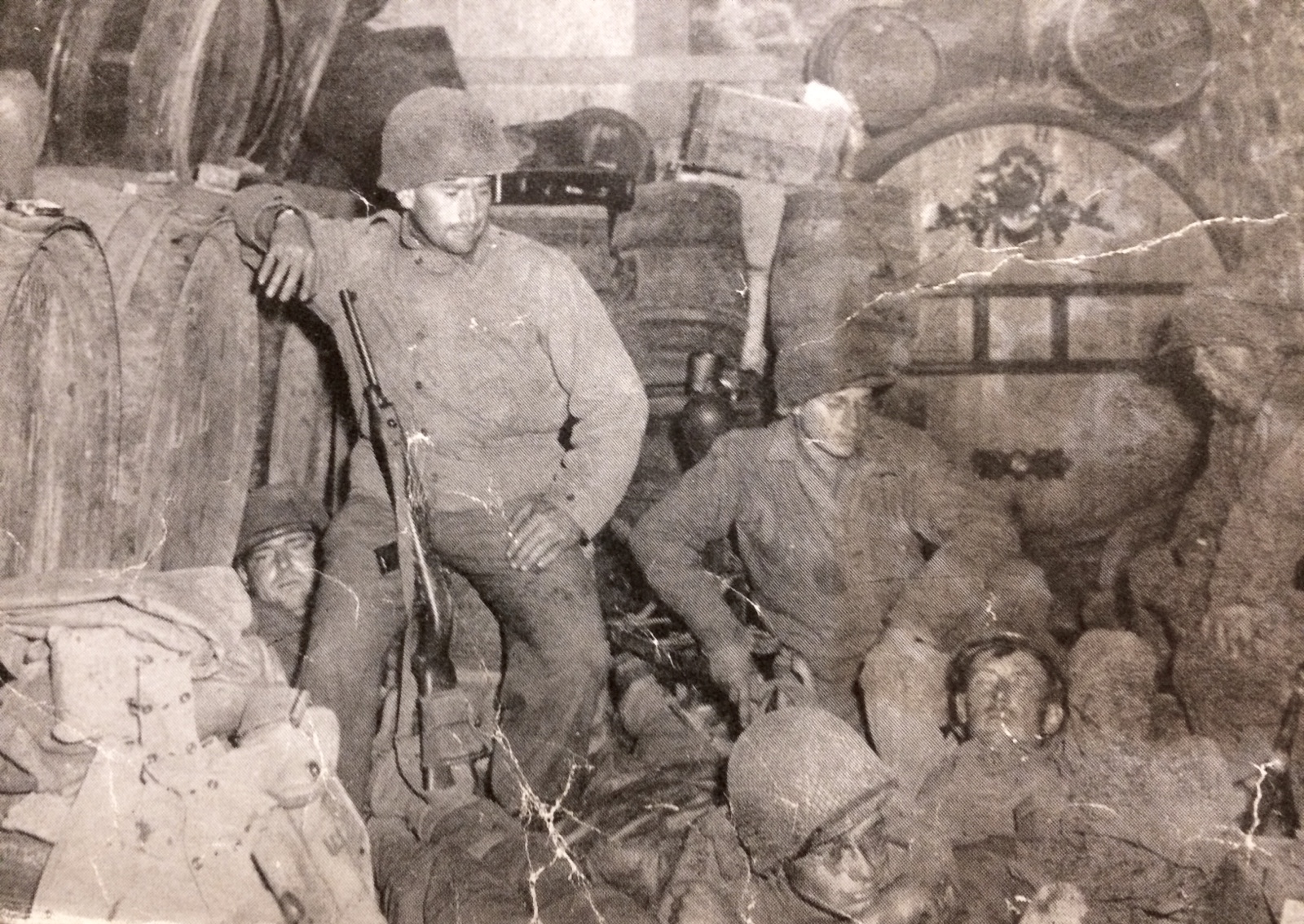
Grandpa was born in August 1922 and grew up in and around Eaton, Ohio, one of a big family that made it through the Great Depression with very little. By 1944 he was a young husband and father serving with the 117th Infantry Regiment of the 30th Infantry Division.
His regiment crossed the English Channel at night and came ashore at Omaha Beach on June 8–9, 1944, just two days after D-Day, while the beach still showed everything that had happened there. From there his division fought through the Normandy hedgerows. At the Battle of Saint-Lô, he was two hedgerows back when misdropped bombs fell on the men in front of him.
On August 7, 1944, near Mortain, France, German panzer units broke through his company’s line in a morning fog. Grandpa was taken prisoner along with about 170 men of his regiment.
170 Days as a Prisoner of War
What came next is hard to imagine. On a truck headed deeper behind German lines, the convoy was strafed by American fighter planes. The man sitting next to him was killed. The prisoners waved anything they could until the pilots recognized them and rolled their wings.
Then he was packed into a boxcar with some 60 men, with no room to sit, and went three days with no food or water. He turned 22 years old on that train. The only thing the guards let him keep was a small book my grandmother had given him for Christmas, and the men held a church service from it while the train rolled east.
He spent the next five months at Stalag III-C, east of Berlin. His older brother Bill had been killed in Italy that May, and Grandpa wouldn’t learn about it for almost a year.
A 500-Mile Walk Home
At the end of January 1945, Russian tanks reached the camp. Grandpa and a small band of fellow prisoners were suddenly free, with no maps, no supplies, no common language, and snow still on the ground. They were told to find their own way. So they walked across Poland, living on potatoes and onions and the kindness of Polish families. More than once they were lined up against a wall by soldiers who didn’t understand why Americans were heading away from the front.
He weighed about 140 pounds when he was captured. By the time they reached Warsaw, roughly 500 miles later, he weighed about 100.
He made it home in the spring of 1945. When the local paper interviewed him, he said the first thing he told my grandmother was that he wanted “a good cup of real coffee.”
How He Found the Texas Hill Country
Grandpa didn’t talk much about the war. He went to work. He climbed telephone poles as a lineman, raised six kids, and in 1957 packed the whole family into a Chevy pulling a trailer and moved to San Antonio for the sake of his son’s health.
In San Antonio he drove a milk truck, worked at the San Antonio Zoo, and then spent 19 years as an electrician at Southwest Research Institute. He served as a deputy sheriff, led his Masonic lodge, and finished his high school diploma in his fifties. His kids spent weekends on his sister’s Hill Country ranch doing cattle drives, and they called it the best time of their childhood.
He was generous with a roof over someone’s head, too. More than once he brought home someone new to town who had a job but no place to stay yet, and they stayed until their first paycheck came.
When he retired in 1984, he and my grandmother bought an RV and a fishing boat and hit the road, usually with grandkids in tow. He never stopped loving the outdoors, and he never stopped bringing his family out into it.
Al’s Hideaway Today
That’s what we built here. Al’s Hideaway sits on 20 acres in Pipe Creek, TX, with two creeks, wide-open dark skies, and no city noise — the same quiet Hill Country he walked us through as kids. Today it’s a glamping getaway just outside San Antonio, with:
- 13 handcrafted cabins, from cozy one-bedrooms with full kitchens to cabins for the whole group
- 10 full-hookup, pull-through RV sites up to 85 feet long, with no backing up required (Grandpa would have approved)
- Primitive campsites for folks who want to sleep closer to the stars
- A pavilion, pool, and outdoor kitchen for reunions, church groups, and riding clubs
- An on-site store with firewood, snacks, sno cones, and more
We’re about 15 minutes from Bandera and 15 minutes from Boerne straight down Highway 46, about 20 minutes from Helotes, and about 45 minutes from downtown San Antonio. Guests come for the quiet and stay for the stars, then head into the Cowboy Capital of the World or the San Antonio River Walk during the day.
Honor Him With Us This Fall
This year our Día de los Muertos altar in the pavilion honors Grandpa, and Al’s Hideaway is part of San Antonio’s Day of the Dead Trail from October 5 through November 5. Guests are welcome to visit it, and to bring a photo of someone they love to add to the altar. On Veterans Day we’ll be thinking of him, his brother Bill, and all the men of the 30th Division who never made it home.
Read Grandpa’s Full Story
Grandpa’s full story, told through his own words, letters, and family photos, was researched and shared by our family at the WWII Letter Project. Our heartfelt thanks to Rebecca Nance for preserving it and letting us share it here.
Come Stay a While
Grandpa knew that the best thing you can give someone is a quiet place to rest. We’d love to give you one. Check live availability and book direct, or give us a call at 830-510-3331. Stay two nights or more and use promo code FUN for 10% off your direct booking.
— Jennifer, Al’s Hideaway